
Are “Best Candle” Lists Really Independent? | I Love Zero
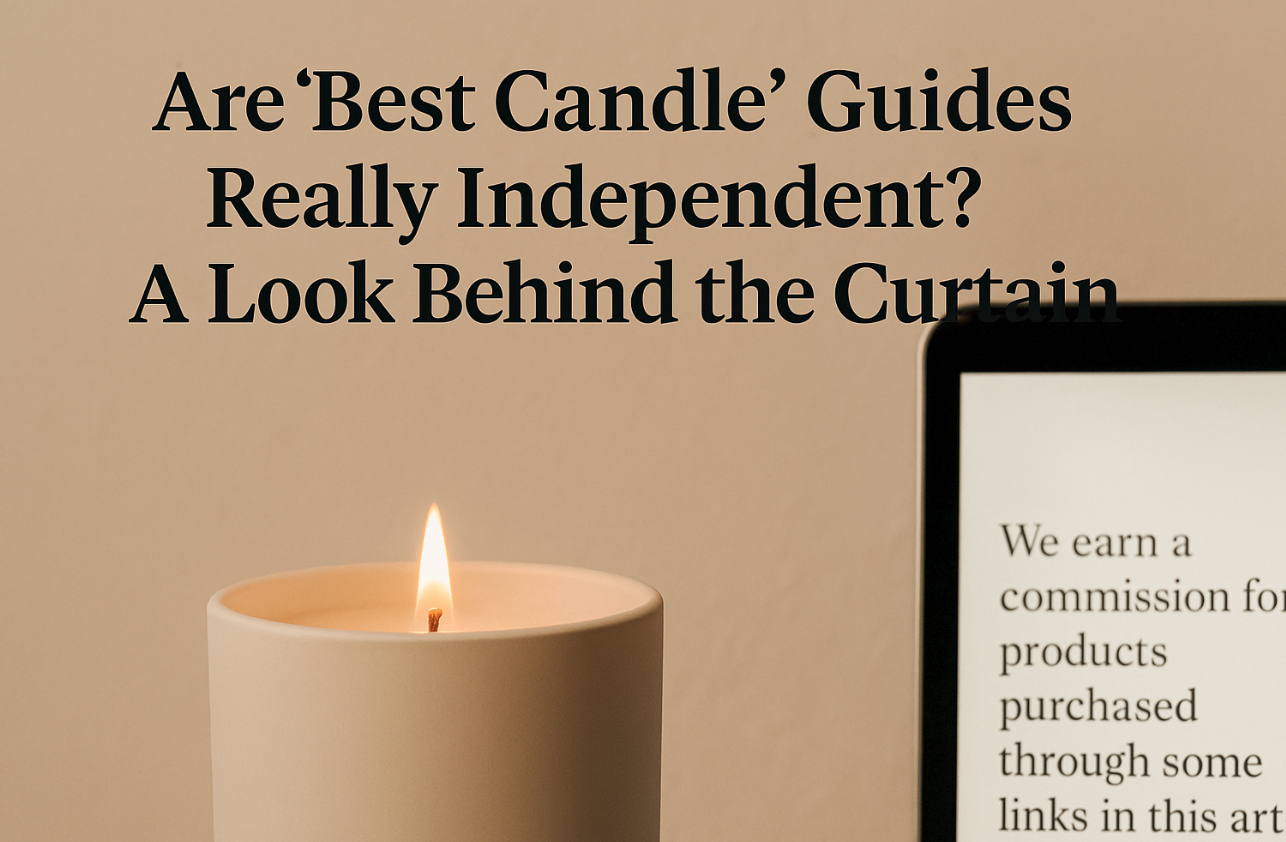 Are “Best Candle” Lists Really Independent? Looking Past the Greenwash
At I Love Zero, we choose everything on our shelves the same way we choose food for our own home: by reading the ingredients, digging into the sourcing, and looking past the greenwashing that’s everywhere these days. “Eco”, “clean”, “natural”, “artisan”, “sustainable” – the words sound great, but they don’t mean much unless you check what’s actually behind them.
So when I read The Telegraph’s recent list of “best scented candles for winter”, I couldn’t help wondering how much of it was genuine testing and how much was glossy branding supported by affiliate links.
This isn’t about bashing their writers. It’s about looking at how these lists work, and why they don’t line up with the values many of us care about – low waste, honest ingredients, sustainability and transparency.
1. Affiliate links heavily influence what appears in these guides
To their credit, The Telegraph does disclose:
“We earn a commission from the affiliate links in this article.”
Nothing wrong with that – everyone has bills to pay – but it does shape the list.
The candles chosen are almost entirely from high-margin, high-affiliate brands such as:
- Jo Malone
- Diptyque
- Liberty
- Neom
- Le Labo
- SpaceNK
- Aery
What don’t we see?
- Small UK makers
- Refillable systems
- Recycled or reused containers
- Real low-waste options
- Anything with transparent supply chains that isn’t part of a luxury gifting culture
In other words, the candles that align most with zero-waste values don’t tend to appear in lists designed to earn commission.
2. Their “testing” looks clever… until you read the details
The testing method sounds solid on the surface:
- sniffing in the office
- three hours of burning at home
- judging scent throw
- judging how the wax melts
But if you care about the environment, air quality or honesty in ingredients, it’s not testing – it’s lifestyle journalism.
Missing entirely are:
- soot analysis
- flame stability
- wick behaviour
- realistic burn-time tests
- proper comparison of wax types
- any evaluation of emissions or indoor air quality
- lifecycle or sustainability assessment
Three hours of burning doesn’t tell you how a candle behaves over 40–70 hours – or what ends up in your air.
3. Paraffin (a fossil fuel by-product) gets a surprisingly gentle write-up
Some of the most expensive candles in the guide use paraffin wax, but readers are barely told:
- where paraffin comes from
- why it burns dirtier
- why jars blacken faster
- why it’s considered the least environmentally friendly wax option
Instead, paraffin is framed as “great for strong scent”.
That may be true, but it’s only half the story – and for people trying to reduce toxins and waste, it’s the wrong half.
4. “Value for money” is treated as “the box looks expensive”
There’s a candle in the list that costs around £100 and uses paraffin. The review praises:
- the textured ceramic pot
- the unboxing “experience”
- the “luxury” feel
Meanwhile, budget-friendly options are criticised for small cosmetic issues like cloudy wax or uneven melt – things caused by air flow and trimming, not quality.
There’s no assessment of:
- cost per burn hour
- waste generated
- whether the pot can be reused or refilled
- whether the brand encourages reuse or just more buying
Which says a lot about the priorities of these guides.
5. Refillable and zero-waste ideas get mentioned… then ignored
There’s a single refillable system mentioned – a ceramic pot with drop-in refills. It gets one paragraph, then dismissed because the reviewer had a slightly uneven melt during the first burn.
If sustainability mattered in the scoring, refillable systems would have been ranked right at the top.
Instead, they barely register.
6. Sustainability barely gets discussed
For a modern buying guide, it’s surprising how little attention is given to:
- lifecycle
- packaging waste
- sourcing
- suppliers’ environmental track records
- reusability of jars
- recycled content
- indoor air quality
- carbon footprint
There’s plenty about “festive tablescapes”, “luxury unboxing” and “which candle looks nice on a coffee table”… but almost nothing about where the candle came from or where it ends up.
So how should a consumer read these lists?
Lifestyle guides aren’t evil – they’re just built to support affiliate revenue and big brands. They’re fun to read, but they’re not neutral.
If you want a candle that aligns with zero-waste values, it’s worth asking:
- What’s the wax made from?
- Can I reuse the jar easily?
- Are refills available?
- What’s actually in the fragrance oil?
- Is the packaging recyclable – or unnecessary?
- Is the price about ingredients… or branding?
At I Love Zero, we try to look at candles the way we look at food labels – with honesty, scrutiny and a healthy suspicion of greenwashing.
Seasonal gift guides are fun, but they’re rarely the full picture.
If you care about what goes into your home – and what goes into the bin afterwards – it’s always worth reading between the lines.